
Clear Aligners vs Invisalign: Which Is Right for You?
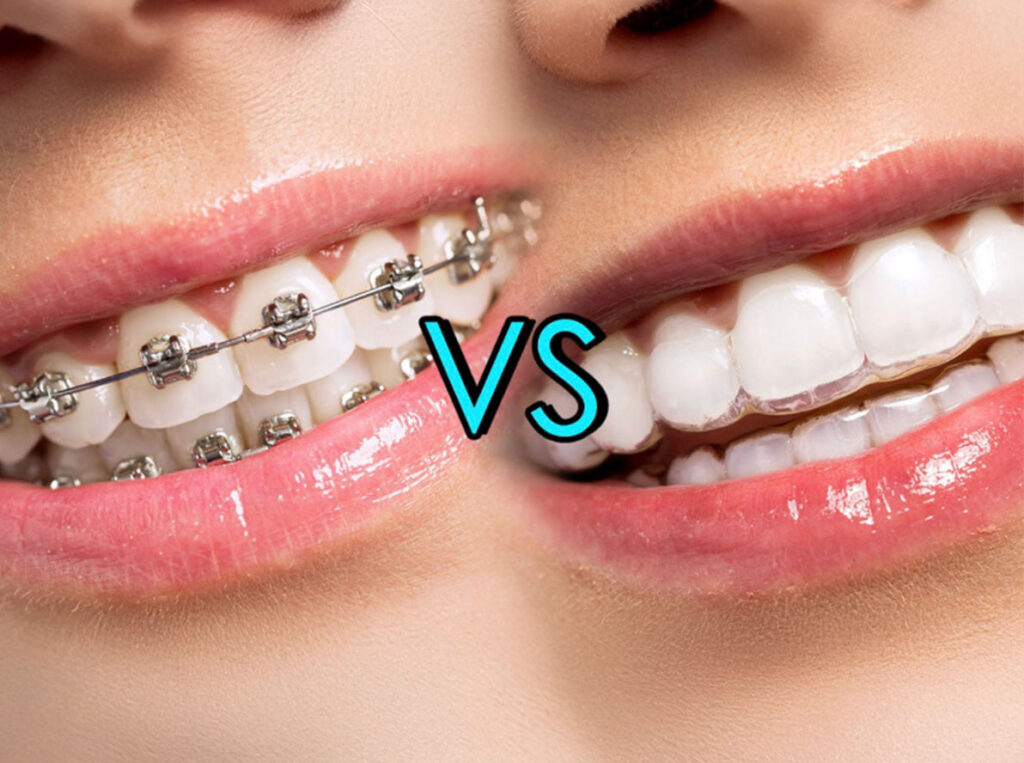
Clear Aligners vs Invisalign: What’s the Real Difference? Invisalign is a brand of clear aligner made by Align Technology. It uses a patented material called SmartTrack and is fitted and monitored exclusively through dentists and orthodontists. “Clear aligners” is the wider category, and it includes Invisalign alongside a growing number of other systems, some dentist-led, some sold direct to consumers online. Most people searching “clear aligners vs Invisalign” already sense the two aren’t quite separate things, but the terms get used loosely enough that it’s worth spelling out properly. Below is what actually differs between the Invisalign brand and generic clear aligner treatment, what each costs in the UK, how long they take, and which one is likely to suit your case. What Are Clear Aligners? Clear aligners are custom-made, removable plastic trays that move your teeth gradually, one small stage at a time. You wear each set for one to two weeks, then move to the next tray in the series, and your teeth shift a fraction of a millimetre at each step until the whole treatment plan is complete. The category covers Invisalign, but also ClearCorrect, Spark, Angel Aligners, and Lucent’s own clear aligner treatments, among others. What made aligners popular in the first place was fairly simple: they’re far less visible than metal braces, and because they come out for eating, brushing and flossing, there’s no real change to daily life during treatment. What Is Invisalign? Invisalign launched in 1997 and was the first clear aligner brand to reach the mass market. It’s still the most recognised name in the category, partly because it was first, and partly because it has more clinical case data behind it than most competitors. Invisalign trays are made from SmartTrack, a proprietary plastic designed to apply steadier, more predictable pressure than standard aligner material, and treatment is planned using detailed 3D digital scans before the first tray is even made. Unlike some newer clear aligner brands, Invisalign has no direct-to-consumer version — every patient goes through a dentist or orthodontist, with in-person check-ups built into the process. Key Differences at a Glance Factor Generic Clear Aligners Invisalign Material Varies by brand, usually a comparable medical-grade plastic Patented SmartTrack material Treatment planning Digital scans and software, quality varies by provider 3D imaging backed by a large clinical dataset Best suited to Mild to moderate cases Mild, moderate, and many complex cases Supervision Depends on provider — some in-clinic, some mail-order Always through a licensed dentist or orthodontist UK cost (approx.) £999–£3,500 £1,500–£5,500 Check-ups Depends on provider Roughly every 6–10 weeks The gap between Invisalign and a well-run, dentist-supervised aligner brand has narrowed a lot in the past few years. For mild-to-moderate cases, which make up the majority of patients, clinical outcomes tend to land in a similar place. Invisalign’s advantage shows up more clearly in harder cases significant crowding, bite correction, or teeth that need to move in unusual directions where its larger evidence base and material properties count for more. Cost Comparison in the UK Price is usually where the decision actually gets made once people realise the clinical difference is smaller than they expected. Invisalign in the UK typically runs from around £1,500 for minor cases up to £5,500 or more for full complex treatment, with most patients landing somewhere between £3,000 and £4,500. Dentist-supervised generic clear aligners, Lucent included, tend to sit lower for comparable cases, usually between £1,895 and £4,495, largely because there’s no brand premium attached. At-home, mail-order aligners can undercut both, sometimes starting under £1,000, but that price reflects the absence of a dentist checking whether treatment is appropriate for you in the first place, and whether it’s actually working once you’ve started. It’s worth being cautious here. A handful of direct-to-consumer aligner companies with no in-person dental supervision have closed down in recent years, leaving customers partway through treatment with no one to turn to. A lower price isn’t much of a saving if nobody is checking your teeth are tracking as planned. Full pricing for each of our treatment plans is available on the clear aligner treatments page. Treatment Time Comparison Treatment length depends far more on how much your teeth need to move than on which aligner brand you choose. As a rough guide: Minor spacing or mild crowding usually takes three to six months, whether you’re using Invisalign or a comparable dentist-supervised alternative. Moderate crowding or alignment issues generally run six to twelve months. Complex bite correction or a full smile redesign can take twelve to eighteen months, and this is where Invisalign’s longer track record with difficult cases sometimes gives it an edge in predictability. We’ve gone into this in more detail in our guide to how long Invisalign actually takes, including timelines broken down by case type. Which Works Better, By Case Type For mild cases small gaps, slight rotation, minor crowding generic clear aligners and Invisalign perform very similarly, and cost becomes the more meaningful factor in choosing between them. For moderate cases, involving general crowding, wider spacing, or a minor bite issue, results are still broadly comparable between the two. What matters more at this stage is the quality of the treatment plan and the experience of the dentist supervising it, rather than the name on the aligner packet. For complex cases, including significant crowding or overbite, underbite, and crossbite correction, Invisalign’s larger clinical dataset and attachment system can produce more predictable results. That said, an experienced dentist working with a well-designed generic aligner system can still achieve strong outcomes for many complex cases too. Most dental professionals would tell you the brand matters less than who’s supervising the treatment. A skilled dentist using a solid clear aligner system will usually get better results than an unsupervised product with no clinical oversight, whatever logo is on the box. Dentist-Supervised Treatment vs At-Home Mail-Order Aligners This distinction matters more than the brand comparison itself, and it applies whether you go with Invisalign or a generic system. With dentist-supervised