
How Long Does Invisalign Take? Real UK Timelines
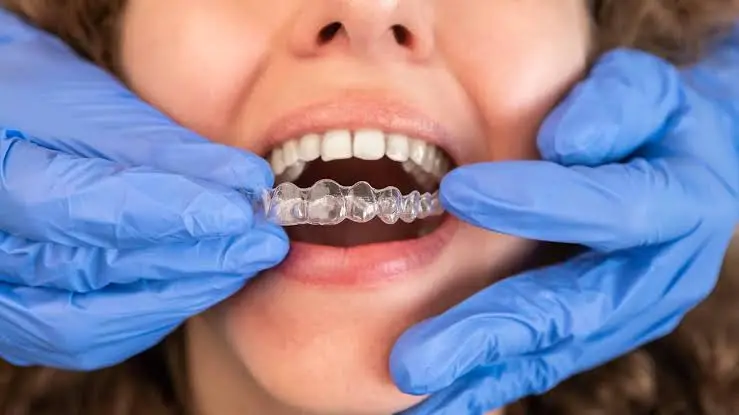
How Long Does Invisalign Take? Average Treatment Time Explained Quick answer: Most Invisalign treatments take 3 to 18 months, depending on how much movement your teeth need. Minor crowding or small gaps can be corrected in as little as 3–4 months, moderate cases typically take 4–8 months, and complex bite corrections can run 12–15 months or longer. Your dentist confirms your exact timeline after a 3D scan of your teeth. If you’re comparing Invisalign to metal braces, or just want to know what to expect before you commit, here’s a full breakdown of what actually determines your Invisalign timeline and how to make sure you’re not one of the patients who ends up wearing aligners longer than necessary. Average Invisalign Treatment Time At a Glance Not every case is the same, so “how long does invisalign take” doesn’t have one single answer, it depends on your starting smile. Here’s a realistic breakdown by case complexity: Case Complexity What It Involves Typical Treatment Time Minor Small gaps, mild crowding, slight rotation 3–4 months Mild–Moderate Noticeable crowding or spacing, minor bite issues 4–6 months Moderate General crowding and alignment issues 6–8 months Complex Significant crowding, bite correction, full smile redesign 12–15 months This mirrors what we see across Lucent Clear Aligners patients: our Lucent One plan is built for 3–4 month minor corrections, Lucent Smile for 4–6 month cases, Lucent Max for 6–8 month general alignment, and Lucent Infinity for 12–15 month complex smile transformations. A dentist can only confirm which category you fall into after reviewing a 3D scan of your teeth; no two smiles move at the same speed. What Affects How Long Invisalign Takes to Work Several factors influence your personal Invisalign timeline. Understanding them helps set realistic expectations from day one. 1. How much your teeth need to move The single biggest factor. Straightforward spacing or mild crowding requires fewer aligner stages than correcting an overbite, underbite, or crossbite, each of which needs more controlled, gradual movement. 2. Wear time (compliance) Aligners only work while they’re in your mouth. Dentists recommend 20–22 hours a day. Removing them too often for meals, snacking, or forgetting to put them back in, is the most common reason treatment stretches out longer than the original plan. 3. Attachments and refinements Small tooth-coloured attachments are sometimes bonded to teeth to give aligners extra grip for more complex movements. If your teeth don’t track exactly as planned, your dentist may order refinement aligners, an extra short round of trays, which adds a few weeks to months. 4. Age and biology Teenagers’ teeth generally move faster because their jawbone is still developing. Adult treatment isn’t slower because of age itself, but adults are more likely to need bite correction alongside cosmetic alignment, which can extend the plan. 5. Aligner-change schedule Some plans switch trays every 1–2 weeks depending on how your teeth are responding, which your dentist monitors and adjusts throughout treatment. The Invisalign Process, Step by Step Knowing the invisalign process helps make sense of the timeline: Free E-Consultation — An initial online consultation to review your smile goals and recommend a suitable treatment plan. Book an E-Consultation to start. In-Clinic Assessment & 3D Scan — A full oral exam plus 3D digital scans, used to design your custom aligner plan and give you an accurate treatment-time estimate. Aligner Fitting — You receive your first set of custom clear aligners, along with your full wear-and-care protocol. Wearing & Changing Trays — You progress through your aligner series, changing sets on your dentist’s schedule while they monitor tooth movement. Refinements (if needed) — A short additional set of aligners to perfect the final result. Retainers — Once treatment finishes, custom retainers are fitted to keep your new smile in place — a step that’s easy to overlook but essential. How Long Does Invisalign Take for Specific Problems? People often search for how long treatment takes for their exact issue, so here’s a closer look: How long does Invisalign take to close a gap? Small single gaps can often close in as little as 3–4 months; multiple or wider gaps take longer. How long does Invisalign take to fix an overbite? Bite corrections are more involved and typically fall into the 9–15 month range, depending on severity. How long does Invisalign take for crowding? Mild crowding: 3–6 months. Moderate to severe crowding: 6–12+ months. How long does it take to get used to Invisalign? Most patients adapt to wearing and speaking with aligners within the first 1–2 weeks. Invisalign vs Braces: Which Is Faster? Traditional metal braces and Invisalign often land in a similar overall timeframe for comparable cases, braces treatment commonly runs 12–24 months. Invisalign isn’t always faster in every case, but for mild-to-moderate corrections it frequently finishes sooner, because trays are changed more precisely and adjusted based on real-time scan data rather than fixed wire adjustments every few weeks. According to the American Association of Orthodontists, average orthodontic treatment length varies significantly by case, which is why an in-person assessment not a generic average is the only reliable way to know your own timeline. How to Make Invisalign Work Faster You can’t force teeth to move faster than biology allows, but you can avoid adding unnecessary time to your plan: Wear your aligners 20–22 hours a day, every day — this is the single biggest factor in staying on schedule. Change trays exactly on schedule, not early or late. Attend every check-up so your dentist can catch tracking issues before they need a full refinement. Clean aligners properly to avoid staining, warping, or damage that could force a remake. Use chewies if recommended, to help trays seat fully against your teeth. How Long Does Invisalign Take With Lucent Clear Aligners? Every Lucent treatment plan is built around realistic, dentist-confirmed timelines rather than one-size-fits-all promises: Lucent One — 3–4 months, for minor crowding or small gaps Lucent Smile — 4–6 months, for mild-to-moderate alignment plus whitening Lucent Max — 6–8 months, for general crowding